Getting a model running on day one is relatively easy. The harder and more expensive half of running a model catalog is maintaining that configuration every day after, because the surrounding ecosystem of GPUs, precisions, and inference engines keeps shifting underneath it.
The math behind an expanding catalog
The models a token factory serves form a matrix that expands every month.
Open and frontier models already number in the hundreds. Underneath them sit multiple GPU architectures, from H100s and H200s to B200s and whatever ships next. Each model runs across several precisions (FP16, BF16, FP8, INT4), which change both memory footprint and hardware constraints. Each of those configurations then runs on an inference engine such as vLLM, TensorRT-LLM, or SGLang, each with its own performance trade-offs.
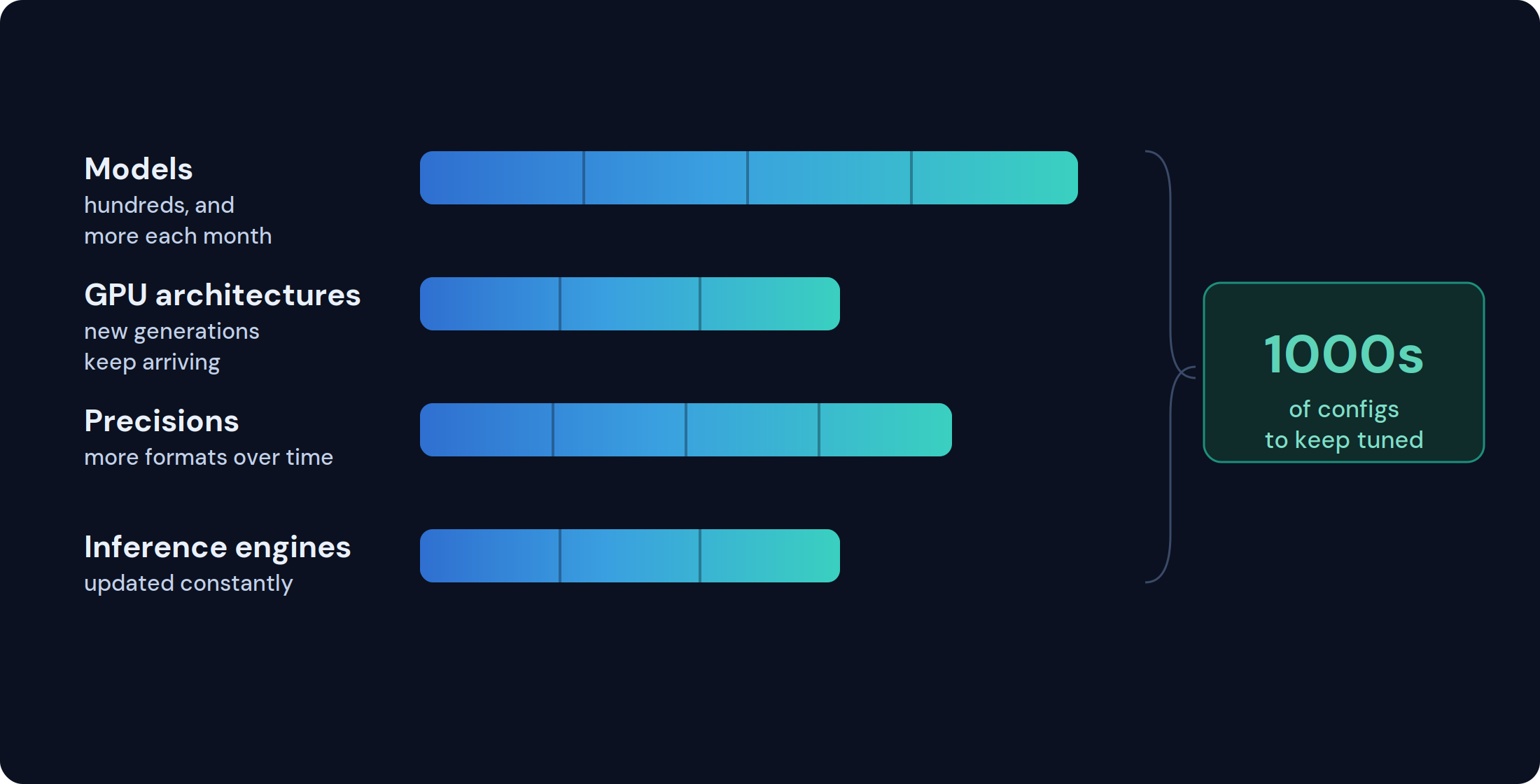
Multiply those variables out and you are managing well over ten thousand potential operating combinations. Not every combination is valid, but that is still the search space you have to navigate and maintain.
Every day late on a model is a day of lost revenue
When a major open-weight model drops, your customers expect it live that afternoon. Look at any recent stretch of releases from Qwen, Gemma, or DeepSeek: they land with zero warning one morning, and the clock starts. Clouds announce day-one support the moment a model drops, and if you are a week behind, customers notice.
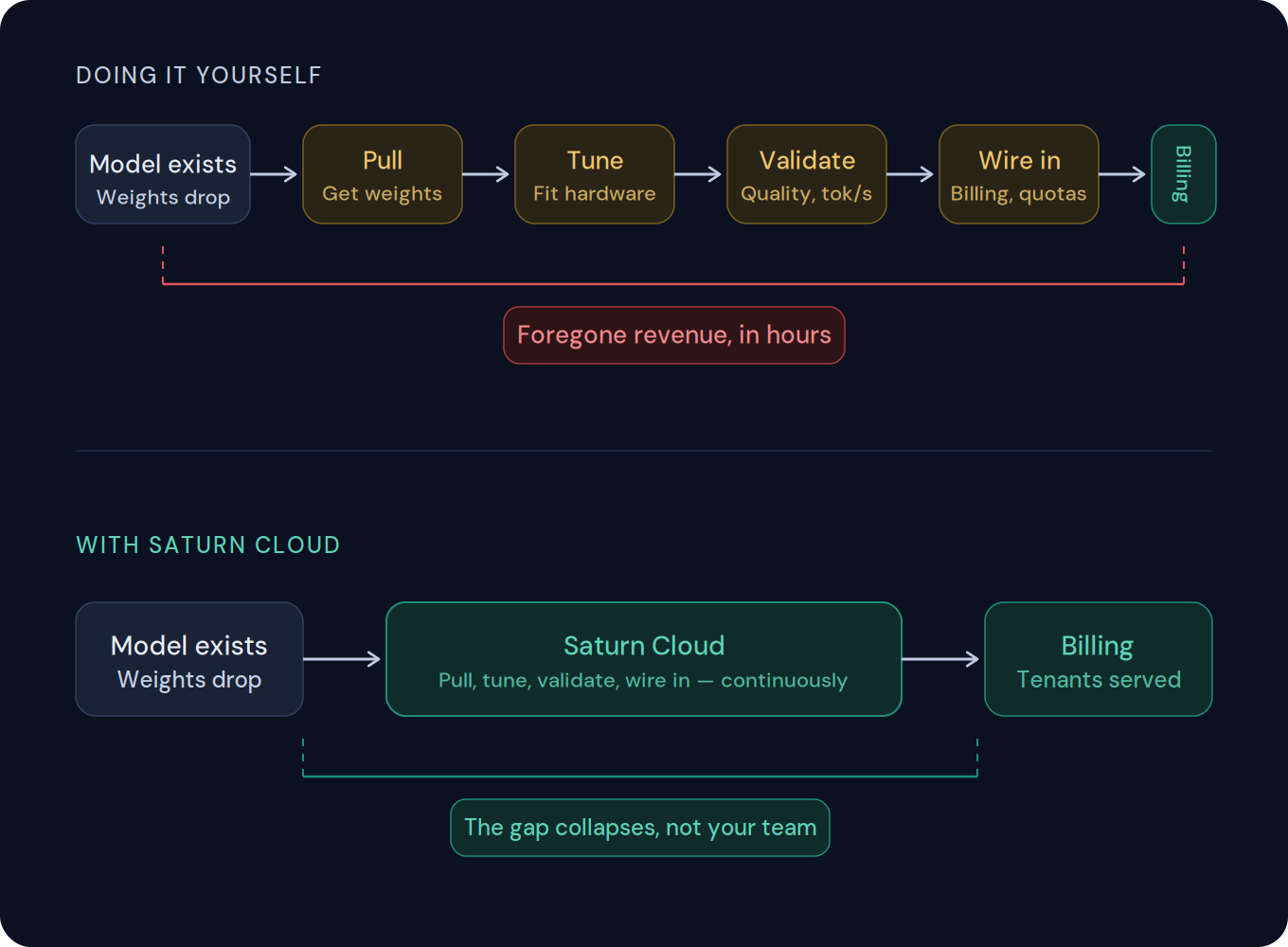
Every model brings a distinct architecture, memory profile, and serving config. Bringing one into production requires a full pipeline:
| Pipeline stage | Key engineering challenge | Production risk |
|---|---|---|
| Pulling and staging weights | Downloading multi-gigabyte models securely and distributing them across cluster storage nodes | Slow deployments, corrupted weight downloads, registry rate limits |
| Hardware optimization | Tuning runtime parameters and precisions for specific GPU architectures (H100, B200, and so on) | Poor hardware utilization, out-of-memory crashes, slower execution |
| Quality and throughput validation | Stress testing to verify output accuracy, latency targets, and tokens per second under load | Degraded model outputs, severe latency spikes under real traffic |
| Infrastructure integration | Hooking the deployment into metering, billing, rate limiting, and observability control planes | Unbilled usage, broken quota enforcement, loss of cluster visibility |
| Zero-downtime deployment | Exposing new endpoints across multi-tenant clusters while existing workloads are running | Service outages, noisy-neighbor performance hits, broken routing for existing users |
Any step in this chain can break, and a rushed deploy can degrade or drop the customers already on your platform. Operators move carefully for good reason, but careful has a price: the gap between a weight release and your first billable token is lost revenue measured in hours.
Every layer updates on its own schedule
A fixed matrix would be work enough. What makes this relentless is that each layer moves independently: model weights, inference engine releases, CUDA and driver versions, and hardware generations all ship on their own cadence.
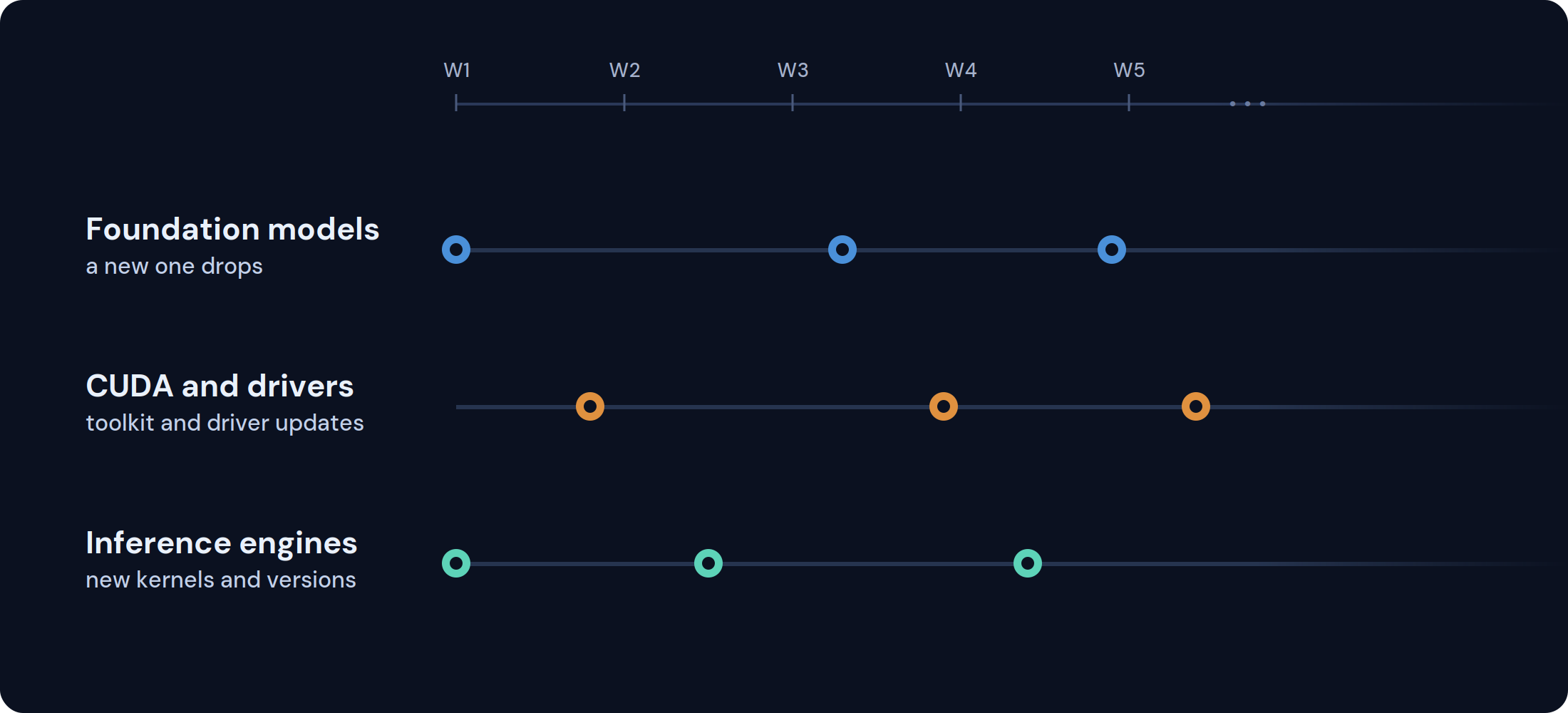
A serving configuration that was the fastest option last month can be well off the pace today because SGLang or vLLM shipped a faster attention kernel. No single model is particularly hard to host. Keeping hundreds of them tuned at the same time is the operational problem.
What “current” looks like in production
Users want low latency, reliable service, and a bill that matches what they used. Meeting that across thousands of potential model and hardware pairs means holding a few targets every day:
- Stable latency and throughput, including guaranteed tokens per second per user during traffic spikes
- A control plane that stays up through deployments, so routing and quota enforcement never pause
- Token telemetry that reconciles down to individual API calls for accurate billing
- New models onboarded within days of release, and new silicon supported within weeks
Hitting those numbers consistently, across a matrix that shifts under you while the fleet scales, is most of the work of running a catalog.
Where Saturn Cloud fits
We built Saturn Cloud to handle this maintenance.
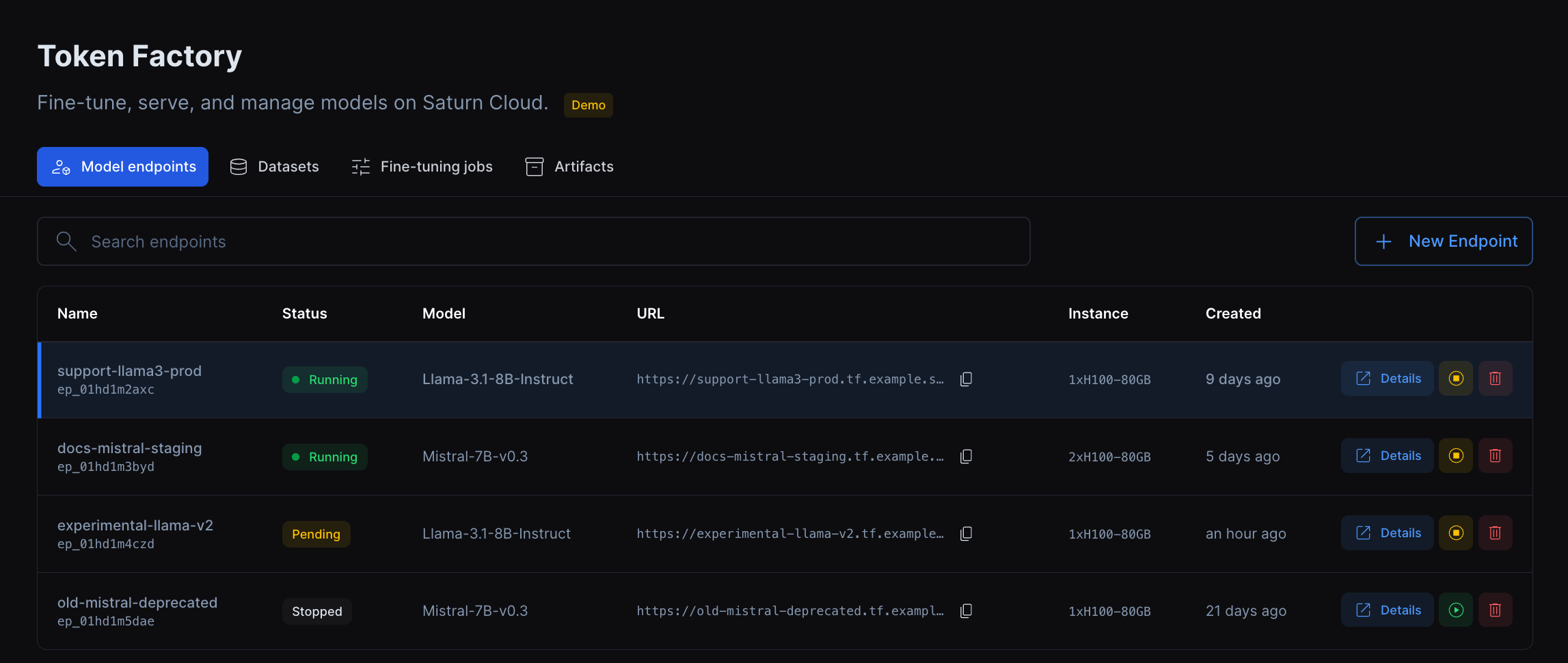
When new models, hardware, or engine patches land, Saturn Cloud turns them into supported, pre-tuned configurations across your existing fleet. You get an inference platform that stays current without staffing a team to track every upstream driver, kernel, and model drop.
To learn more, visit Saturn Cloud.